Pelvic Health
How to Relax a Tight Pelvic Floor: A PT's Guide
October 9, 2026 9 min read
If you've ever noticed yourself clenching your jaw in traffic, holding your breath while you answer emails, or lying in bed with your shoulders up near your ears, you already know what it feels like when your body can't let go. Your pelvic floor can get stuck in that same "on" position. And just like your jaw or shoulders, it rarely relaxes simply because you tell it to.
A tight pelvic floor (the clinical term is hypertonic) can show up as urgency, trouble emptying, constipation, painful sex, pain with insertion of tampons or a deep ache that's hard to pin down. If you read our guide on tight vs. weak pelvic floor and recognized yourself on the "tight" side, this post is your next step.
At Revelle Physical Therapy, our pelvic floor PTs in Atlanta (Chamblee), Alpharetta and Denver (Greenwood Village) help people release pelvic tension every day. Here's how we approach it: the nervous system, the breath and the movements we actually teach in the clinic.
The ideas in this post are a great place to start, but some symptoms deserve a personalized exam. Book a visit with a pelvic floor physical therapist if:
Both Georgia and Colorado are direct-access states, so you don't need a referral to start pelvic floor PT.
The pelvic floor is a group of muscles that works like a hammock at the base of your pelvis. It supports your organs, controls your bladder and bowels, and plays a role in sexual function. To do its job well, it has to contract and fully relax.
Muscles can get stuck in a guarded, overactive state for a lot of reasons:
This is the part of pelvic floor care we never skip.
Your nervous system has two main modes. One is "fight or flight," your body's alarm system. The other is "rest and digest," the calm state where healing, digestion and relaxation happen. When you're stressed, anxious or in pain, your body leans toward fight or flight. Muscles brace, breathing gets shallow and your body gets ready to protect you.
The pelvic floor is part of that protective response. Many people unconsciously clench their pelvic floor when they're stressed, the same way others clench their jaw or tighten their shoulders. If stress is constant (a demanding job, a newborn, chronic pain, a hard season of life), the pelvic floor may never get the signal that it's safe to let go.
This is why stretching alone often isn't enough. If your nervous system still feels like it's on high alert, your muscles will keep guarding. Real, lasting change usually comes from addressing both the muscles and the nervous system together.
A few signs your nervous system may be part of the picture:
That last cycle is very real, and it's also very treatable.
More than you might think. Your breathing diaphragm (the dome-shaped muscle under your ribs) and your pelvic floor are designed to move together, like a piston.
Every breath is a tiny, natural pelvic floor stretch. That is, if you're breathing fully.
When we're stressed, we tend to breathe high in the chest, with short, quick breaths. The diaphragm barely moves, so the pelvic floor barely moves. Over time it loses its natural rhythm of letting go.
Slow, deep breathing does two things at once. It physically moves the pelvic floor through its full range, and it signals your nervous system to shift toward rest and digest. That's why breathing is the foundation of everything else in this post.
We call it 360 breathing because the goal is to expand in every direction: front, sides and back. Not just pushing your belly out.
A longer exhale than inhale is a simple way to calm the nervous system. If you feel lightheaded, slow down and take smaller breaths.
Common mistakes: lifting your shoulders, forcing your belly out, pushing or bearing down. The release should feel soft and easy, never strained.
A tight pelvic floor is often less about weak willpower or "bad" muscles and more about a learned habit. Over months or years, your nervous system can come to treat clenching as the default, so the muscles stay switched on even when there's no reason to guard. In the clinic, we call the process of reversing this down-training: gradually teaching your body that it's safe to rest.
The goal is a pelvic floor that responds to what your body needs: one that can contract when it's called on, then settle back into a calm, balanced resting state (what we'd call homeostasis) the rest of the time.
Like any new habit, this takes repetition. A few ways to build it into your day:
These short moments throughout the day are often just as important as your dedicated stretching time.
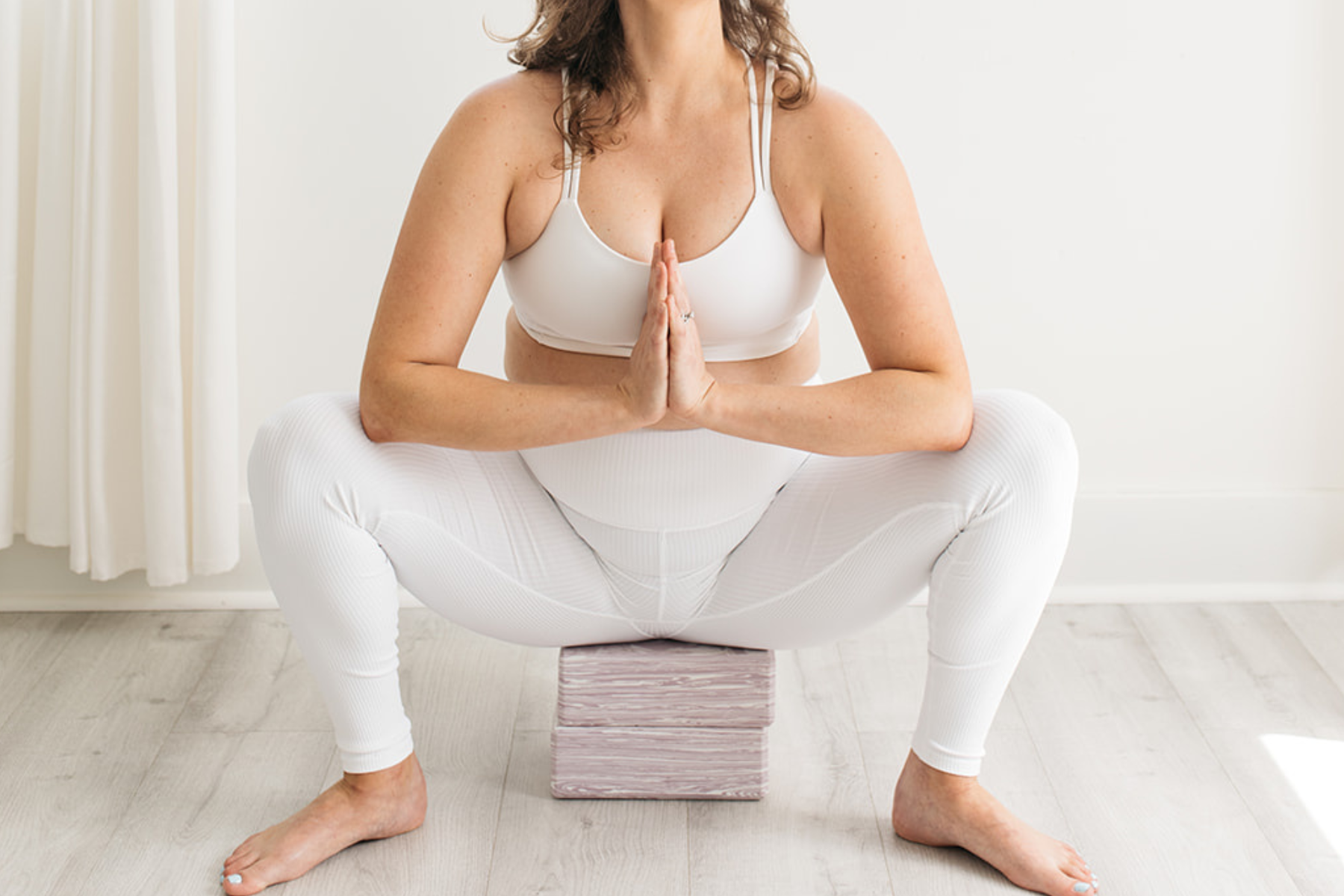
Once 360 breathing feels natural, we pair it with positions that gently lengthen the pelvic floor. The magic is in combining the two. The position opens the space, and the breath guides the muscles to let go.
These are three of the stretches we give most often at Revelle.
A pillow under your hips or chest makes this more comfortable if your knees or hips feel tight.
How often? Try a short routine once or twice a day: a few minutes of 360 breathing, then each position for 5 to 10 breaths. Consistency matters more than intensity. Stretching should feel like gentle release, never pain.
Small changes throughout your day can keep your pelvic floor from creeping back into tension:
Breathing and stretching help a lot of people, but a tight pelvic floor can be stubborn. Sometimes symptoms are really coming from weakness, coordination or a mix of both, and the right plan depends on what's actually going on.
In a pelvic floor PT evaluation, we look at your muscles, breathing, posture, habits and stress, then build a plan just for you. That might include hands-on muscle release, biofeedback, a personalized home program and, when helpful, tools like pelvic wands or dilators.
Not sure where to start? Take our pelvic floor quiz to see what your symptoms may be telling you. You can also learn more about pelvic floor physical therapy at Revelle or read about how we treat pelvic pain and painful sex. We see patients in Chamblee, Alpharetta and Greenwood Village, and no referral is needed.
Start with a free 10–15 minute phone consult, or book a 1:1 visit at Revelle — Atlanta (Chamblee + Alpharetta) or Denver.
Visit us in Atlanta (Chamblee), Alpharetta, or Denver.
A 1-page guide from our DPTs — what to actually expect at week 1, 6, and 12 postpartum, and the real signs you'd benefit from pelvic floor PT. No fluff. No fear.
You are leaking, or feeling pressure, or hurting — and Denver has both urogynecologists and pelvic floor PTs. Here is how to decide who to see first, and how the two actually work together.
Read LocalA Doctor of Physical Therapy walks you through what pelvic floor PT actually looks like in Denver — who it's for, why so many Denver women are booking it, and how to know if it's right for you.
Read