Postpartum
C-Section Scar Massage: When to Start and How to Do It Safely
November 20, 2026 9 min read
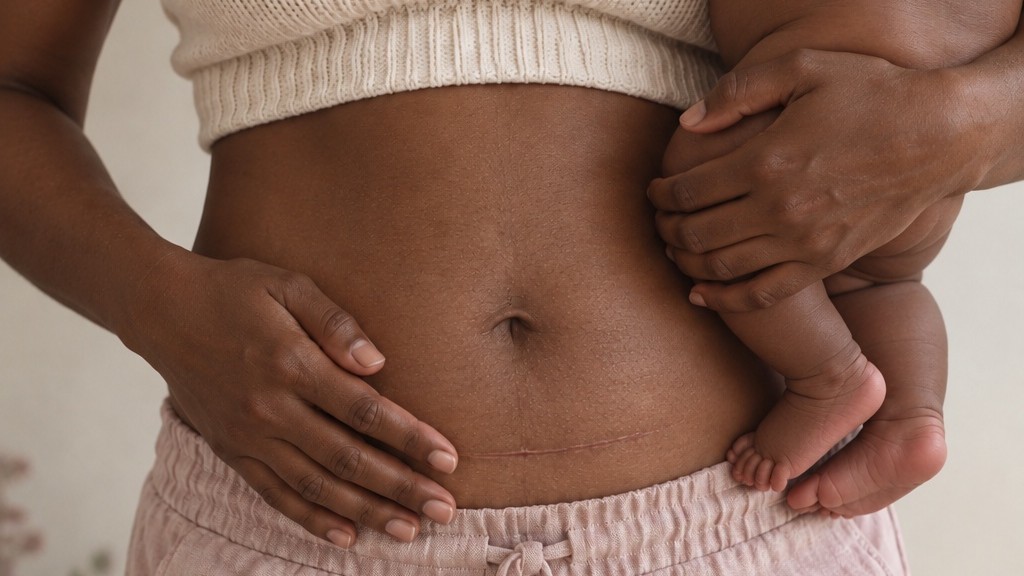
Your incision may look healed while the skin around it still feels unfamiliar. You might notice numbness in one spot, sensitivity in another, or a pulling sensation when you stand up, reach overhead, or lift your baby. It is understandable to wonder whether massage could help—and whether touching the area is safe.
C-section scar massage can be one part of recovery, but it is not a requirement, a race, or something you need to push through. The first question is not how firmly to massage. It is whether your wound is fully healed and whether the approach feels appropriate for your body.
At Revelle Physical Therapy, we support postpartum recovery in Atlanta, Alpharetta, and Denver. This guide explains how to approach a healed scar gently, what massage can and cannot do, and when a personalized assessment is a better next step than another online tutorial.
Consider an assessment if a healed C-section scar feels persistently painful, sensitive, or restrictive during everyday movement. You can also ask for help with abdominal weakness, leaking, pelvic pressure, or uncertainty about returning to lifting and exercise. A cesarean birth does not rule out pelvic floor symptoms: pregnancy itself places demands on your abdominal wall and pelvic floor.
A healing problem needs medical attention, not massage. Contact your maternity care team promptly for increasing redness, warmth, swelling, drainage, a wound that opens, fever, or worsening incision pain. Sudden severe pain or feeling very unwell warrants urgent care. Do not massage an incision with these signs.
You do not have to wait until you feel comfortable massaging the scar to ask about PT. Your therapist can discuss recovery, positioning, and movement without working directly on the incision. Your surgical team’s precautions remain the starting point.
Wait until the incision is fully closed and healed, with no open areas, scabs, drainage, or signs of infection. Many people reach that point around six to eight weeks after birth, but the calendar alone is not clearance. Delayed healing, infection, or other complications can change the timeline.
If you are uncertain, have your obstetric clinician, midwife, or another qualified professional check the wound before you begin. Follow any individualized restrictions you were given. The Kingston and Richmond NHS guidance on scar massage after cesarean birth also emphasizes full wound healing rather than starting automatically at a particular week.
Being cleared for general activity does not mean you need to use deep pressure over the scar. You can begin with gentle contact around it, progress gradually, or choose to wait. An appointment at six weeks is a checkpoint, not a deadline for your body to feel normal.
If your incision is still healing, focus on the wound-care instructions from your maternity team. Avoid experimenting with tools, vigorous rubbing, or products meant to “break up” tissue. Early recovery is not the time to test how much pressure you can tolerate.
Gentle scar work aims to improve your comfort with touch and the movement of the skin and superficial tissues around a healed incision. Some people find it helpful for sensitivity or a feeling of tightness. Others need a different approach, or do not find massage particularly useful.
Research on C-section scar massage is limited. It should not be presented as a guaranteed treatment for pain, internal adhesions, or the appearance of your abdomen. You cannot tell what is happening inside your abdomen just by feeling the skin, and home massage cannot confirm or remove deep surgical adhesions.
A “shelf” above the scar can reflect several factors, including skin, body composition, swelling, and the abdominal wall. It is not proof that your scar is stuck, and massage cannot promise to flatten it. Your recovery deserves care without turning your abdomen into another project to perfect.
Numbness and sensitivity can also coexist. Reduced sensation does not mean you should press harder to feel something. A therapist can help you distinguish a tolerable stretch from pain and consider whether another source of symptoms needs medical evaluation.
The following is a starting framework for a fully healed incision, not a substitute for instructions from someone who has assessed you. Wash your hands and choose a comfortable position that lets your abdominal muscles relax—perhaps reclined with pillows supporting your knees. You do not need a special device or expensive scar product.
Start with light touch on the skin above or below the scar. Use the pads of your fingers rather than your nails. If direct contact feels uncomfortable, remain beside the scar instead of forcing yourself to touch it. Looking at or touching the area can bring up emotions as well as physical sensations; you can pause at any point.
Try a small, gentle movement of the skin in a circle, or slightly side to side. Think of moving the skin a little rather than scrubbing across its surface. Begin briefly and check how the area feels during the session and afterward. The goal is a manageable experience, not a set number of repetitions.
When nearby touch feels comfortable, and your clinician has confirmed healing, you may gradually work closer to and over the scar. Do not force the tissue to move farther or copy a deep technique because someone else demonstrates it online. Pressure should remain comfortable, and you should be able to breathe normally.
Stop if you notice pain, skin irritation, new swelling, or symptoms that continue or worsen after you finish. Repeatedly provoking the area is not evidence that treatment is working. If gentle contact is difficult, an individualized assessment can help you find a less irritating starting point.
It is possible for one part of the area to feel numb while another feels sharply sensitive. These are different experiences, and neither is a reason to aggressively rub or pinch the tissue. If sensation is reduced, visually check the skin and keep pressure light so you do not accidentally irritate it.
For sensitivity around a fully healed scar, you might first try brief, comfortable contact with your hand or a soft fabric. That is different from deep massage. Stay within what feels manageable and do not keep going through burning or sharp pain. A clinician can suggest a graded approach that fits your symptoms.
If clothing brushing the area feels uncomfortable, or you are avoiding normal movement because of pain, mention that at an appointment. The answer may involve positioning, movement, scar care, or further medical evaluation—not simply more repetitions of massage.
Your birth experience matters, too. You can tell your therapist that the area feels emotionally difficult to touch, ask them to explain each step, or decline scar work entirely. A good recovery plan should respect your comfort and consent, not treat hands-on work as obligatory.
Your scar is only one part of the picture. A useful assessment considers how you breathe, move your trunk, use your abdominal muscles, and manage tasks such as getting out of bed, carrying a car seat, or lifting your baby. It also makes room for bladder, bowel, and pelvic symptoms you may not have connected with a cesarean birth.
A therapist may work on comfortable movement, gradual strengthening, and pelvic floor coordination alongside scar care when appropriate. The plan depends on your symptoms and goals; not everyone needs the same exercises or hands-on treatment.
If you notice a ridge through your abdomen during movement, you can also read how to tell if you have diastasis recti. Scar massage does not diagnose or treat every abdominal concern, and a visible change alone does not tell you what your body can safely do.
If you want to return to running or heavier lifting, scar comfort is not the only readiness measure. Your overall strength, symptoms, recovery from activity, and medical history matter. Our article on postpartum healing beyond six weeks explains why ongoing rehabilitation can be useful after the routine checkup.
If you would like support, explore Revelle’s postpartum pelvic floor physical therapy and C-section recovery care, or start with our pelvic health quiz. Georgia and Colorado are direct-access states, so you do not need a physician referral to begin physical therapy; concerning wound symptoms still need medical review.
Start with a free 10–15 minute phone consult, or book a 1:1 visit at Revelle — Atlanta (Chamblee + Alpharetta) or Denver.
Visit us in Atlanta (Chamblee), Alpharetta, or Denver.
A 1-page guide from our DPTs — what to actually expect at week 1, 6, and 12 postpartum, and the real signs you'd benefit from pelvic floor PT. No fluff. No fear.
A pelvic floor PT's guide to releasing tension: calming the nervous system, 360 breathing, and the child's pose, happy baby and deep squat routine we teach at Revelle.
Read PostpartumSix weeks postpartum, your OB clears you and the symptoms are still there. A North Atlanta DPT on what real postpartum pelvic floor recovery looks like — and why the suburban insurance-mill model keeps falling short.
Read