PostpartumA Letter to the Mother Recovering:

A Letter to the Mother Recovering:
Why Postpartum Healing Doesn't
End at 6 Weeks
May 4, 2026 9 min read
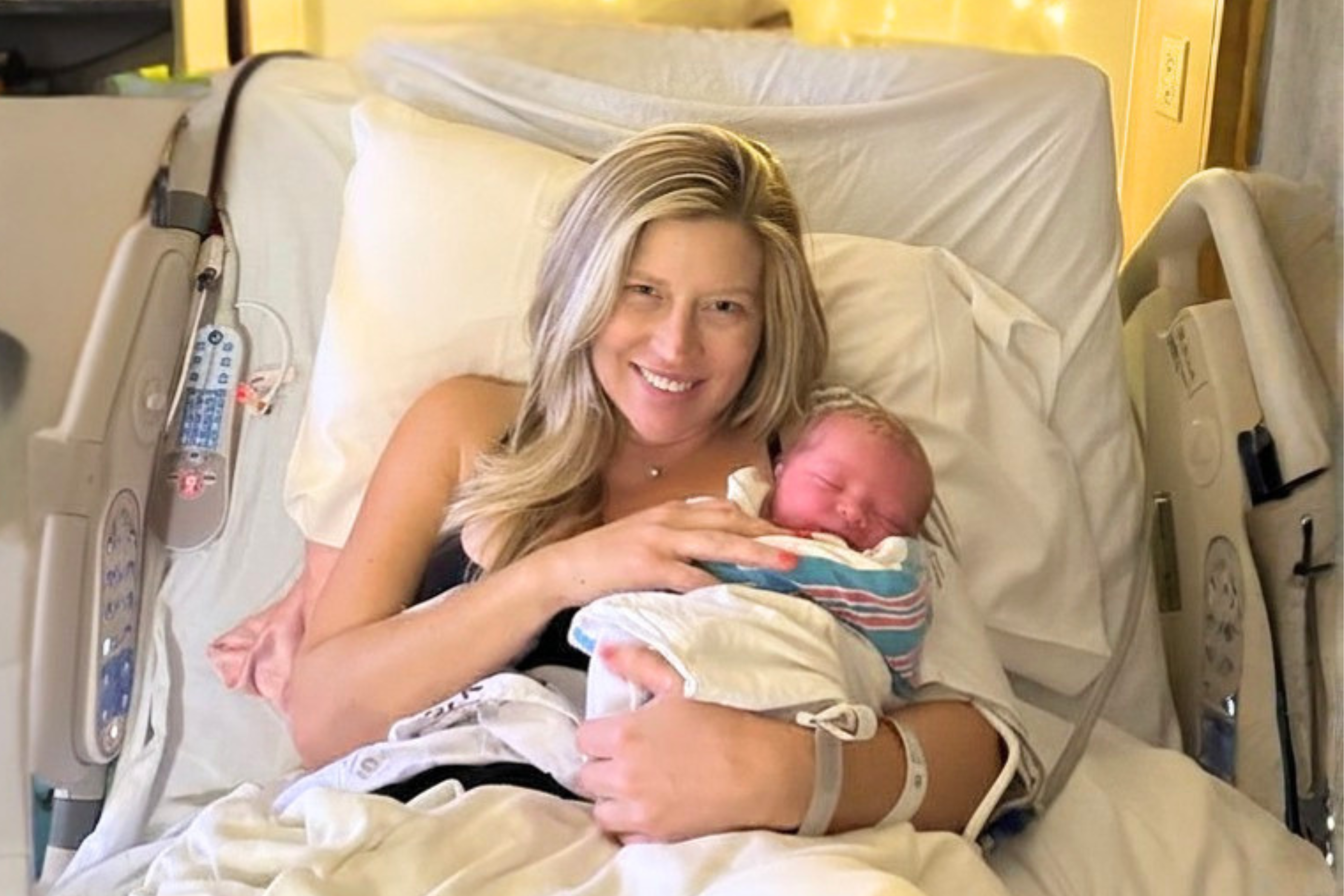
There is a moment in postpartum recovery that almost no one warns you about. It comes a few weeks after the visitors stop arriving and the meal train ends, after the baby has settled into something resembling a rhythm and the world has quietly assumed you must be "back to yourself" by now. You stand in front of the mirror, or you bend down to pick up the car seat, or you sneeze in the produce aisle — and you realize something is still very, very different.
If that's where you are right now, in Atlanta or Chamblee or Alpharetta or Denver or Greenwood Village or anywhere in between — this letter is for you.
Because here is what we want every mother to know: your healing does not end at six weeks. It is not supposed to. And the fact that you are still figuring out your body, your core, your pelvic floor, your energy, and your sense of self months — or even years — after birth does not mean you are behind. It means you are human, and you grew a human, and the timeline you were handed at your six-week postpartum visit was never the whole story.
Before we go any further, the short answer to the question most postpartum patients quietly ask themselves: should I see someone about this? If you are leaking urine, feeling pressure or heaviness in your pelvis, struggling with painful sex, dealing with a belly that still domes or feels disconnected, experiencing low back or hip pain that started after delivery, or simply wondering whether what you are feeling is "normal" — yes. A pelvic floor physical therapist can help. You do not need a referral in Georgia or Colorado. You do not need to wait for a specific milestone. And you do not need to be in crisis to deserve care.
The six-week postpartum visit became standard because that is roughly how long it takes for the uterus to return to its pre-pregnancy size and for surface-level healing of vaginal tears or a cesarean incision to be visibly closed. It was designed as a basic safety check, not as a comprehensive evaluation of your pelvic floor, your core, your nervous system, your hormones, or your readiness to return to the activities you love.
In other words: six weeks tells your provider that nothing dangerous is happening. It does not tell either of you whether you are healed.
The full healing arc of postpartum recovery looks more like this. The first six weeks are the acute recovery window — tissue knitting, bleeding stopping, hormones beginning to shift. Weeks six through twelve are when most of the deeper soft-tissue remodeling begins, but the body is still drenched in relaxin if you are breastfeeding, and the pelvic floor is rebuilding strength and coordination from a profoundly stretched starting point. Three to six months is when many women finally feel like their nervous system has caught up with motherhood — and also when subtle dysfunction (leaking, prolapse symptoms, painful sex, diastasis) starts to become impossible to ignore because you are trying to do more. Six to twelve months is true rebuilding territory. And beyond a year? You can absolutely still make significant progress. We see patients five, ten, fifteen years postpartum who heal beautifully once someone finally addresses the actual issue.
Healing past the six-week mark is not just "doing your Kegels." It is a layered, whole-body process, and it usually includes some combination of the following.
Restoring breath and core coordination. Pregnancy changes the position of your ribcage, the length of your abdominal wall, and the way your diaphragm and pelvic floor talk to each other. A huge part of postpartum recovery is teaching this system to fire as a team again. Without it, every other exercise you do is being layered on top of a foundation that hasn't been rebuilt.
Releasing what is too tight before strengthening what is too weak. Many postpartum pelvic floors are not just weak — they are also gripping. They have been working overtime for months, often guarding against pain or pressure, and they need to learn to fully release before they can fully contract. This is one of the biggest reasons "just do more Kegels" fails so many women.
Addressing scar tissue. Whether you had a cesarean, a perineal tear, an episiotomy, or both — scar tissue affects how the surrounding muscles and fascia move. Gentle scar mobilization (something we teach you to do at home) can dramatically change pain, sensation, and function months or years down the road.
Rebuilding the deep core, then the global core. The transverse abdominis, multifidus, diaphragm, and pelvic floor are the inner unit. They have to come online before your obliques, your rectus, and your glutes can do their job without compensating. Skipping this step is why so many women feel like their core "just won't come back."
Restoring confidence in your body again. This is the part nobody puts on a checklist, and it is often the most important. Healing is not just structural. It is the slow, steady process of trusting your body again — to lift, to run, to laugh, to be intimate, to move through the world without bracing.
Here is the hard truth, said gently: time alone does not fix everything. A surprising number of postpartum issues will not resolve on their own, no matter how much rest or how many months pass. These include:
If any of these have been hanging around past your six-week clearance, that is your body asking for support — not failing.
We have to name this part, because it shapes how every mother experiences her own healing. In the United States, postpartum care is some of the worst in the developed world. One six-week appointment. No standard pelvic floor evaluation. No core rehab. No mental health screening that translates into actual care. And then a culture that asks you, three months in, whether you've "lost the baby weight."
Other countries do this differently. In France, every postpartum mother is prescribed pelvic floor PT as standard care. In the Netherlands, postpartum support continues for weeks in your home. The fact that your healing has been harder, lonelier, or longer than you expected is not a personal failure. It is a systemic gap. And the work we do at Revelle — across all three of our locations — exists in part to close it.
If you have never seen a pelvic floor PT before, here is what to expect at Revelle. Your first visit is around 60 to 75 minutes. We start with a long conversation — your pregnancy, your birth, your symptoms, your goals, your fears, what you've already tried. Nothing is rushed.
Then we do a movement assessment: how you breathe, how you stand, how you bend, how your core and pelvic floor coordinate. With your consent and only when appropriate, we may do an internal pelvic floor exam to assess strength, tone, coordination, and any tender areas — but this is always your call, and we will work effectively without it if you prefer.
You leave with a clear understanding of what is going on, why, and a personalized plan. No fear-mongering. No vague "do your Kegels" advice. Just real, individualized care from a clinician who has dedicated her career to women's bodies.
If you are reading this at 2 a.m. while feeding your baby, or in the bathroom while your toddler bangs on the door, or in the car between school pickup and a work call — we see you. The fact that you searched for this, that you carved out three minutes to read it, means something inside you already knows the truth: you deserve more than the bare minimum. You deserve to feel strong in your body again. You deserve to run, lift, laugh, and be intimate without bracing for what might happen. You deserve to be cared for the way you have spent months caring for someone else.
Postpartum healing does not end at six weeks. And wherever you are on the timeline — six weeks, six months, six years — there is still so much possible.
If you are not sure whether what you are experiencing warrants a visit, take our 60-second pelvic floor quiz — it will give you a personalized starting point. If you are ready to book, our postpartum pelvic floor PT team in Atlanta, Alpharetta, and Denver is here whenever you are.
With so much care, The Revelle Team
Start with a free 10–15 minute phone consult, or book a 1:1 visit at Revelle — Atlanta (Chamblee + Alpharetta) or Denver.
Visit us in Atlanta (Chamblee), Alpharetta, or Denver.
A 1-page guide from our DPTs — what to actually expect at week 1, 6, and 12 postpartum, and the real signs you'd benefit from pelvic floor PT. No fluff. No fear.
If your last pelvic floor PT in Atlanta involved 15 minutes with a tech and a stack of resistance bands, that is not what the research says works. Here is what a 60-minute 1:1 session actually looks like — and why it matters for results.
Read LocalYou are leaking, or feeling pressure, or hurting — and Denver has both urogynecologists and pelvic floor PTs. Here is how to decide who to see first, and how the two actually work together.
Read