Pregnancy
Pelvic Floor Physical Therapy During Pregnancy
January 15, 2024 7 min read
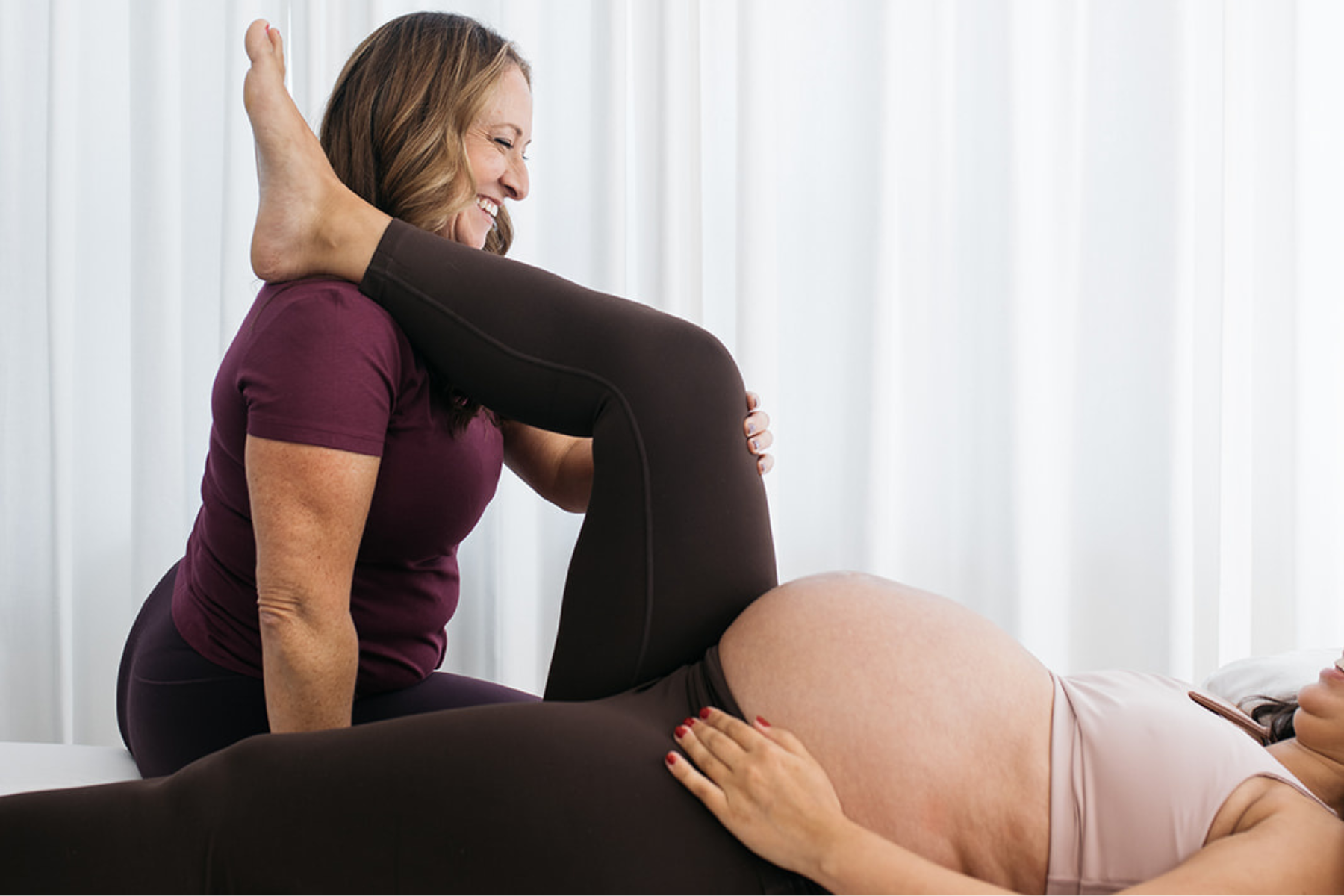
So many people spend pregnancy preparing the nursery, packing the hospital bag, and getting ready for the baby—but very few are taught how to prepare their body for birth. Instead, you're often told that leaking a little when you sneeze, that nagging back pain, and that deep pelvic pressure are just "normal" parts of the experience. You're supposed to just deal with it.
If you’ve been feeling frustrated, dismissed, or just exhausted by it all, you’re not alone. The aches and pains of pregnancy are common, but that doesn't mean they're something you have to endure. And preparing for labor shouldn't be a mystery.
This is where pelvic floor physical therapy comes in. It’s specialized care designed to help you feel stronger and more comfortable during pregnancy, more prepared for childbirth, and more supported for your recovery afterward. So let's break down what it is and why it can be a total game-changer.
First, let's get one thing straight: it's not just about doing endless Kegels. While strengthening exercises can be part of the plan, prenatal pelvic floor PT is so much more. It’s a comprehensive approach to your body’s musculoskeletal health during a time of massive change.
Your pelvic floor is a group of muscles that forms a supportive sling at the base of your pelvis. These muscles have a few big jobs:
During pregnancy, hormones like relaxin soften your ligaments, and the growing weight of your baby puts increasing pressure on these muscles. They are working overtime. A pelvic floor physical therapist is a movement expert trained to assess and treat this entire system—your muscles, joints, posture, and breathing—to make sure it's all working together as well as it can. The goal is to solve current problems and prevent future ones.
If you’re nodding your head to any of the "normal" parts of pregnancy, a PT can help. We see pregnant people for a huge range of issues that are often brushed aside. The truth is, you don't have to just wait it out until delivery.
At Revelle, we regularly help pregnant clients find relief from:
Pain and leaking aren't a rite of passage. They're signals from your body that it needs more support—and a pelvic floor PT can give you the tools to provide it.
While pain relief is a huge benefit, one of the most powerful reasons to see a PT during pregnancy is for birth preparation. Think of it as training for a marathon. You wouldn't just show up on race day without any training, and labor is one of the most athletic events of your life.
Here’s how we help you prepare:
1. Connecting to Your Pelvic Floor: Childbirth isn't about clenching—it's about letting go. Many people hold tension in their pelvic floor without realizing it. We teach you how to consciously relax and lengthen those muscles, which is a key skill for allowing your baby to descend during labor.
2. Learning How to Push Effectively: Pushing is a skill. We can teach you how to coordinate your breath with your core and pelvic floor to push in a way that is more effective and less fatiguing. This helps conserve energy and can reduce strain on the pelvic floor. A 2018 systematic review found that supervised pelvic floor muscle training during pregnancy can help shorten the second stage of labor.
3. Finding Optimal Labor & Delivery Positions: The best position to labor in is the one that feels best for you. We can help you practice different positions (hands and knees, squatting, side-lying) and find modifications that work for your body to help open the pelvis and use gravity to your advantage.
4. Perineal Massage: Studies show that perineal massage late in pregnancy can help increase the tissue's elasticity and may reduce the risk of severe tearing during a vaginal birth. We can teach you how to do it correctly and comfortably, taking the guesswork out of the process.
If you've never been to pelvic floor PT, it's normal to feel a little nervous about what to expect. We get it. Our entire approach is built on making you feel comfortable, heard, and empowered.
Your first visit is about 60 minutes long and starts with a conversation. We want to hear your story—your history, your symptoms, your goals for your pregnancy and birth, and any fears you have. This is a judgment-free space.
Then, we’ll do a whole-body assessment. We’ll look at your posture, how you breathe, your alignment, and your overall strength and movement patterns. We’re looking at how your entire system is adapting to pregnancy.
Part of a thorough pelvic floor assessment often includes an internal exam. This allows us to directly feel the pelvic floor muscles to check their tone (are they tight or relaxed?), strength, and coordination. It is the gold standard for getting a clear picture of what's going on. However, it is always your choice and is only performed with your ongoing consent. We can still learn a lot from an external assessment if you're not comfortable with an internal one. Your comfort is our top priority.
From there, we’ll create a personalized plan just for you. It might include hands-on therapy, targeted exercises, and changes to your daily movements to help you feel better right away.
The simple answer is: anytime. It's never too early or too late to benefit from pelvic floor physical therapy during pregnancy.
Even if you're not experiencing any pain, PT can act as preventative care to minimize issues down the road and give you a smoother postpartum recovery. If you're not sure if PT is right for you, you can take our 2-minute quiz to get a better sense of where to start.
Ultimately, preparing your body for birth is one of the greatest acts of self-care you can give yourself. You deserve to feel strong, capable, and supported through this incredible transformation.
Start with a free 10–15 minute phone consult, or book a 1:1 visit at Revelle — Atlanta (Chamblee + Alpharetta) or Denver.
Visit us in Atlanta (Chamblee), Alpharetta, or Denver.
A 1-page guide from our DPTs — what to actually expect at week 1, 6, and 12 postpartum, and the real signs you'd benefit from pelvic floor PT. No fluff. No fear.
If your last pelvic floor PT in Atlanta involved 15 minutes with a tech and a stack of resistance bands, that is not what the research says works. Here is what a 60-minute 1:1 session actually looks like — and why it matters for results.
Read LocalYou are leaking, or feeling pressure, or hurting — and Denver has both urogynecologists and pelvic floor PTs. Here is how to decide who to see first, and how the two actually work together.
Read